
‘Sittin’ on the Right Side of the Blues’
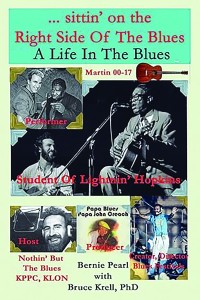
Through the 1980s and 90s, Long Beach was known as a solid blues town, thanks mainly to the annual Long Beach Blues Festival, and later the Big Time Blues Festival, both hosted by Bernie Pearl. Much has been written about these annual events with online videos of performances by Buddy Guy, Junior Wells, John Lee Hooker, B.B. King, Etta James, Albert King, James Cotton and Ike Turner, enough to fill a blues hall of fame peppering the Internet. But the real story of what and who created this world-famous event? Never told. Until now.
In 1957, 17-year-old L.A.-born Bernie Pearl joined a kibbutz in Israel, learning to pick potatoes and required to register for Israeli military service at age 18. Meanwhile, his older brother Ed Pearl gathered together contributions from siblings, his mother and others to open the Ashgrove in Hollywood in July 1958. Told of this event, Bernie rushed back to the states to be part of the action. As he put it, “the blues chose me” through the talents of a multi-talented one-man band, Jesse Fuller, known for “San Francisco Bay Blues.”
Bernie’s recording career began in 1964 with King David & the Parables, dubbed “the first white blues band in Southern California.” Members included Barrett Hansen, better known as Dr. Demento with a handful of their sole 45 issued. I got mine directly from Barry.
In 1966, Pearl and Long Gone Miles commenced a road trip to Rhode Island for that state’s folk festival. That’s where Pearl met Howlin’ Wolf, whom he backed during one show. Then there was Wolf’s inept attempt at finding female company for the evening and how it went awry.
From there, Bernie visited sister Bernice in Queens, her son, Randy Wolfe and live-in partner Cass. Pearl caught a Jimmy James & the Blue Flames show at the Cafe Wha? in the Village. Later known as Jimi Hendrix, James asked Randy to join the Blue Flames, dubbing him Randy California. Randy and Cass, Ed Cassidy subsequently formed the psych band Spirit. Pearl also sat in with John Lee Hooker, who asked him to drive him back to Detroit. Pearl declined, later wishing later he had done so.
One of the major stars at the Ashgrove was Big Mama Thornton, who Pearl backed in 1966. Her original 1953 hit, “Hound Dog” was a major record for Elvis in 1956. A decade or so later, her original version of “Ball And Chain” was a thematic success for Janis Joplin, who asked Big Mama’s permission.
Pearl went on-air in 1969 on Pasadena’s underground FM, KPPC while Dr. Demento kicked off his decades-long career as the entertaining on-air voice of the novelty genre.
In 1973, Pearl made a pilgrimage to Houston to visit legendary blues guitarist Lightnin’ Hopkins, who had made many an appearance at the Ashgrove. The female cab driver asked Pearl if he was sure he wanted to visit the neighborhood he named, until she found out it was where the famed blues originator Lightnin’ Hopkins lived. Once there, she asked Hopkins for his autograph.
In 1971, Pearl backed renowned guitarist Freddy King, who had national identity with his blues hit, “Hide Away.” Again backing King at the Anaheim Convention Center in 1976, Pearl realized that exciting the crowd was possible, but sustaining the excitement was another skill altogether. The concert featured Leon Russell and “Elton something.” Sadly, Freddy King passed away in December 1976.
Pearl’s next move was the long-lasting “Nothing But the Blues” show on FM88, KLON, which had moved from Long Beach City College to CSULB in 1980. Pearl booked guests like Blind Joe Hill, George “Harmonica” Smith and Smokey Wilson on his new show and soon, he and his predecessor Dan Jacobson decided to do this live, thus the Long Beach Blues Festival. For Pearl, the festival lasted until 1990 when he left the station. But live blues continued on with the less ambitious yet well-received Big Time Blues Festival which featured acts like Louisiana Red and the Wolf’s guitar player, Hubert Sumlin.
Pearl took up with several notable performers like Harmonica Fats, who at 320 pounds lived up to that nickname and blues violinist Papa John Creach, whose hysterically funny way of dealing with an obscene phone call is described.
A solid 580 pages, “Sittin’ on the Right Side of the Blues” is so complex and uber-complete that it required two, that’s two, tables of contents. One table is for the various stories contained within, the other for biographies of significant and lesser-known, but important blues men and women who worked in the L.A. and Long Beach scene, 23 in all.
It is recommended not attempting to read the book in one or several sittings. Absorb specific essays one at a time, or page through and find sections that give out unique first-person information
Never-before published photos abound, black and white photos of famed bluesmen and women, photos of locations like the Ashgrove and Smokey Wilson’s Pioneer Club in L.A., as well as dozens of black and white and color photos of blues festival stars embellish the story of twin major festivals and the decades-long blues career of Long Beach’s Bernie Pearl.
Category:
- Log in to post comments
Featured Video
Beachcomber
Copyright 2026 Beeler & Associates.
All rights reserved. Contents may not be reproduced or transmitted – by any means – without publisher's written permission.

